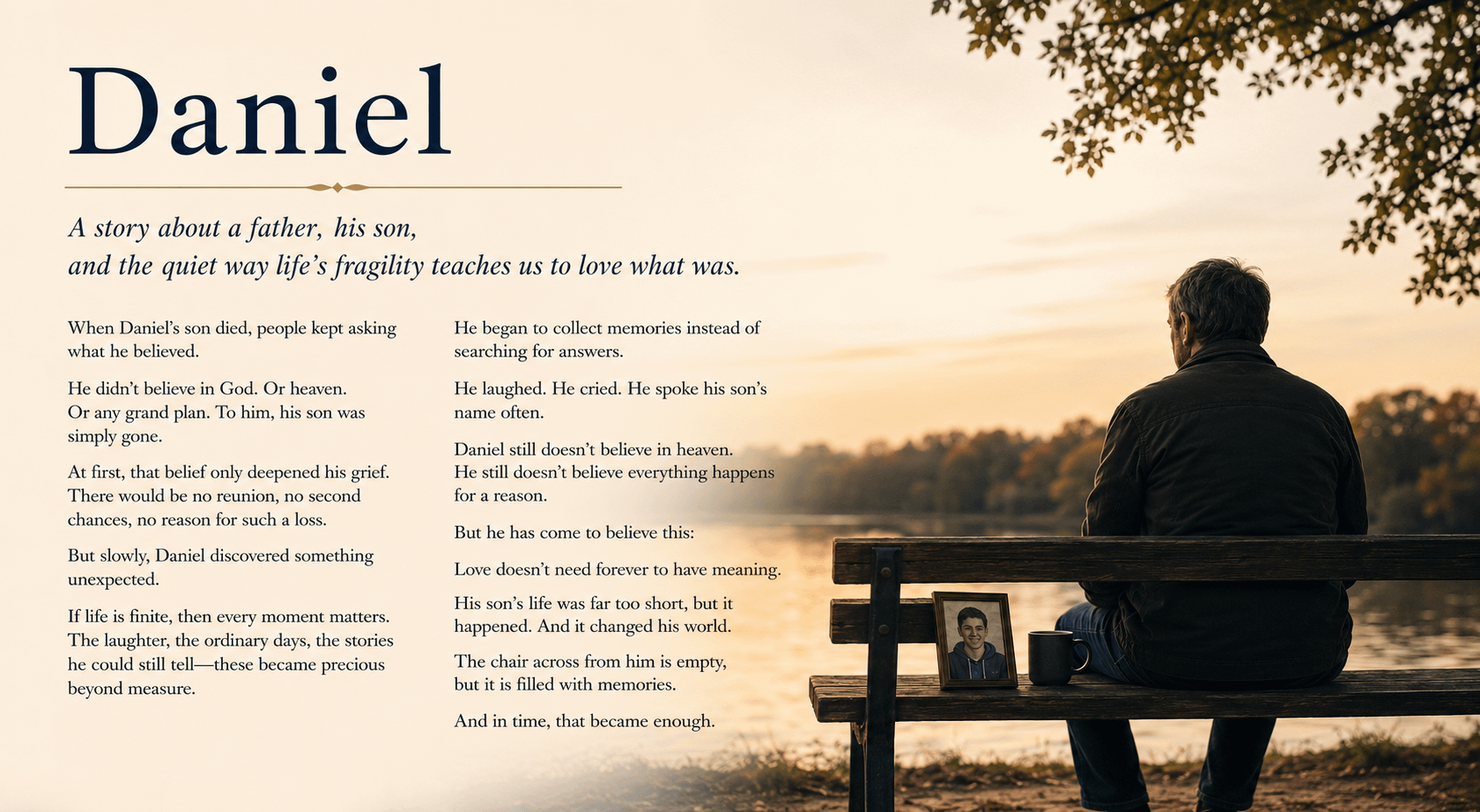
Beliefs, Loss and the Stories We Tell Ourselves
When someone dies, we do not simply lose a person. We lose conversations that will never happen, plans that will never be fulfilled, and a future we had quietly imagined. In many ways, grief is not only the loss of a life; it is the loss of meaning. This is where beliefs become important. When I use the word “beliefs”, I am not speaking solely about religion. Beliefs are much broader than that. They are the ideas, assumptions and understandings we hold about life, death, love, purpose and what it means to be human.
Some people believe in God.
Others believe in an afterlife.
Some believe that death is a natural part of existence and that our legacy lives on through those we have touched.
Others are unsure what they believe, and many move between certainty and uncertainty throughout their lives.
What is remarkable is how often our beliefs shape the way we negotiate loss.
The Same Event, Different Experiences
Imagine two people standing in the rain. One sees a miserable, grey day that has ruined their plans. The other sees a welcome shower nourishing the earth after a long drought. The rain is the same. The experience is different. Loss can be similar. The death of a loved one is a painful reality regardless of our beliefs, but the meaning we attach to that loss can profoundly affect how we process it.
For one person, a funeral may be a farewell.
For another, it is simply “until we meet again.”
For one family, death feels like a full stop.
For another, it feels more like a comma in a much longer sentence.
Neither is right or wrong. They are simply different ways of understanding the same reality.
Beliefs Give Us a Framework
Human beings naturally search for meaning. We ask questions such as: Why did this happen? What happens now? Where are they? Will I see them again? How do I carry on? Beliefs provide a framework through which we attempt to answer these questions. A map does not remove the mountain in front of you, but it can help you understand where you are and how you might continue your journey. Grief remains painful. The tears still fall. The longing remains. But beliefs can provide a context within which suffering becomes more manageable.
When Beliefs Are Challenged
Interestingly, bereavement does not only reveal our beliefs; it can also challenge them. Many people discover that a significant loss causes them to question things they had always assumed to be true. A person with strong faith may suddenly find themselves asking difficult questions. Someone who has never considered spiritual matters may find themselves exploring them for the first time. Others discover that the beliefs they thought they held no longer fit their experience. This is entirely normal. Grief has a way of stripping life back to its essentials. It asks us to look honestly at what we truly believe rather than what we have simply inherited or assumed.
The Belief That Matters Most
Over the years, I have met families from many different faiths, cultures and worldviews. Some have held firm religious convictions. Others have described themselves as spiritual but not religious. Many have had no particular faith at all. Yet there is one belief that seems almost universal. It is the belief that love matters. Whether people speak of heaven, memories, legacy, energy, spirit, family or simple human connection, they often arrive at the same conclusion. Love remains. It changes shape. The person is no longer physically present. But the love does not disappear. It continues in stories, habits, values, photographs, laughter, tears and the countless ways someone’s life has touched the lives of others.
Holding Space for Different Beliefs
One of the great privileges of my role is meeting families with very different understandings of life and death. My responsibility is not to tell people what they should believe. It is to listen. To understand. To help create a ceremony that reflects the beliefs, values and experiences that were important to the person who has died and those who loved them. Because ultimately, a funeral is not about promoting a particular worldview. It is about honouring a life. And whether our beliefs lead us to certainty, hope, mystery or unanswered questions, they all remind us of something important: The life that has been lived mattered. The love that was shared mattered. And the memories that remain continue to shape us long after someone has gone. Perhaps that, in itself, is a belief worth holding onto.
Discover more from
Subscribe to get the latest posts sent to your email.