
I believe, personally and professionally, that our final rites of passage are a natural reaction to loss and are not exclusive to humans.
Animals display remarkable mourning and funeral-like behaviours, underscoring their intricate social and emotional connections from carrying deceased infants to holding vigils and even burying their dead.
Chimpanzee mums exhibit profound grief by cradling their deceased infants, grooming them, and resisting separation for days or weeks.
Dolphins demonstrate empathy by nudging dead calves to the surface and escorting grieving mothers.
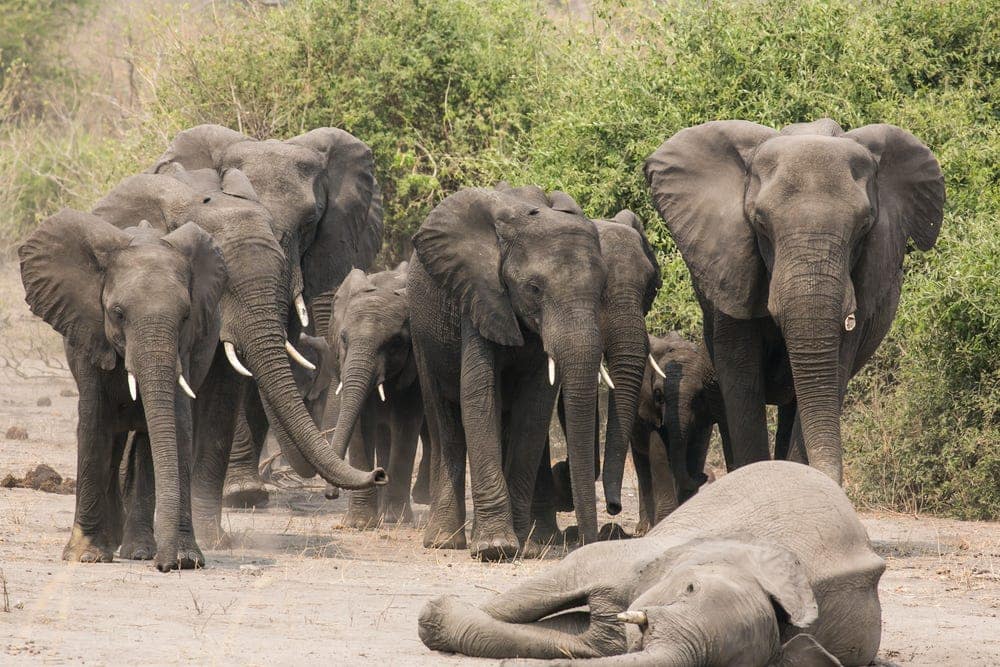
Elephants are known for their mourning rituals; they bury their deceased with foliage and revisit the remains of their herd members.
Adult giraffes hold solemn vigils to pay respects to deceased young ones.
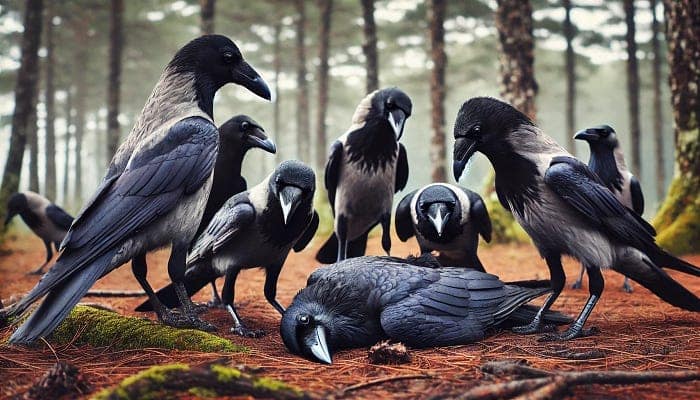
Magpies show respect by laying twigs and pine needles near their dead companions, similar to a funeral.
Red foxes care for their deceased partners by burying them with earth and branches.
Beaked Whales push their deceased calves to the water’s surface, reflecting their acknowledgement of loss.
Humans Are Animals, Too
Like the animal kingdom, experiencing the loss of a loved one is one of life’s most profound challenges—don’t let anyone tell you otherwise! And funerals play a very significant role in helping us navigate the complex emotional journey whilst grieving. They provide a structured framework during tumultuous moments, allowing us to process our feelings within a supportive community.
At a funeral, we find the emotional support needed to articulate our grief and acknowledge any anger or confusion. Funerals create sacred moments of unity and thanksgiving, marking the end of life while ensuring the continuation of love and relationships among those left behind.
The Current ‘No Funeral’ Trend
Planning your funeral is becoming increasingly popular. So is the recent trend of denying loved ones the opportunity to engage in the natural process of mourning rituals. Making a funeral plan for direct cremation may seem like a straightforward, cost-effective option for you. Still, it is also essential to consider that this decision will likely impact your loved ones for the rest of their lives. When making these plans, it’s necessary to keep them in mind. After all, your funeral is for the living—.
The potential drawbacks for non-attended cremations include:
• Lack of a traditional farewell:
The absence of a traditional viewing or funeral service can be emotionally challenging for some family members and friends who value communal rituals and public expressions of grief.
• Limited opportunity for closure:
For those who find closure in a formal funeral service, direct cremation may not provide the same level of emotional support.
• Disagreements within the family:
Direct cremation may cause disagreements within the family about how to handle the ashes and whether to have a memorial service.
• Impersonal process:
Navigating the process may feel impersonal for some families, especially those unfamiliar with alternative funeral arrangements.
• Delayed grief:
Some families may experience a delayed grieving process if they feel they haven’t had a proper opportunity to say goodbye.
Another Common Trend

However, on the upside, direct cremation can give families the freedom to plan a memorial service at a later date, allowing time for the initial shock of loss to subside. Alongside unattended cremations, there is also the trend of holding memorial ceremonies either in the home, at the pub, or at another venue before, on the day, or after the cremation. In this way, the family has time to commemorate your place in their lives, which doesn’t necessarily need to be considered when planning your funeral.
While a funeral or memorial service is a natural expression of grief, it can also be vital to the grieving process, offering a space for community, remembrance, and closure. We must then be careful not to work against a basic animal instinct.
Acknowledging such instincts means recognising inherent, often automatic behaviours crucial for survival and reproduction, like hunting, fleeing predators, and nurturing offspring.
These instincts, passed down through generations, are essential for a species’ survival. In my view, funerals and mourning rituals [call them what you like] are that important!
Discover more from
Subscribe to get the latest posts sent to your email.